
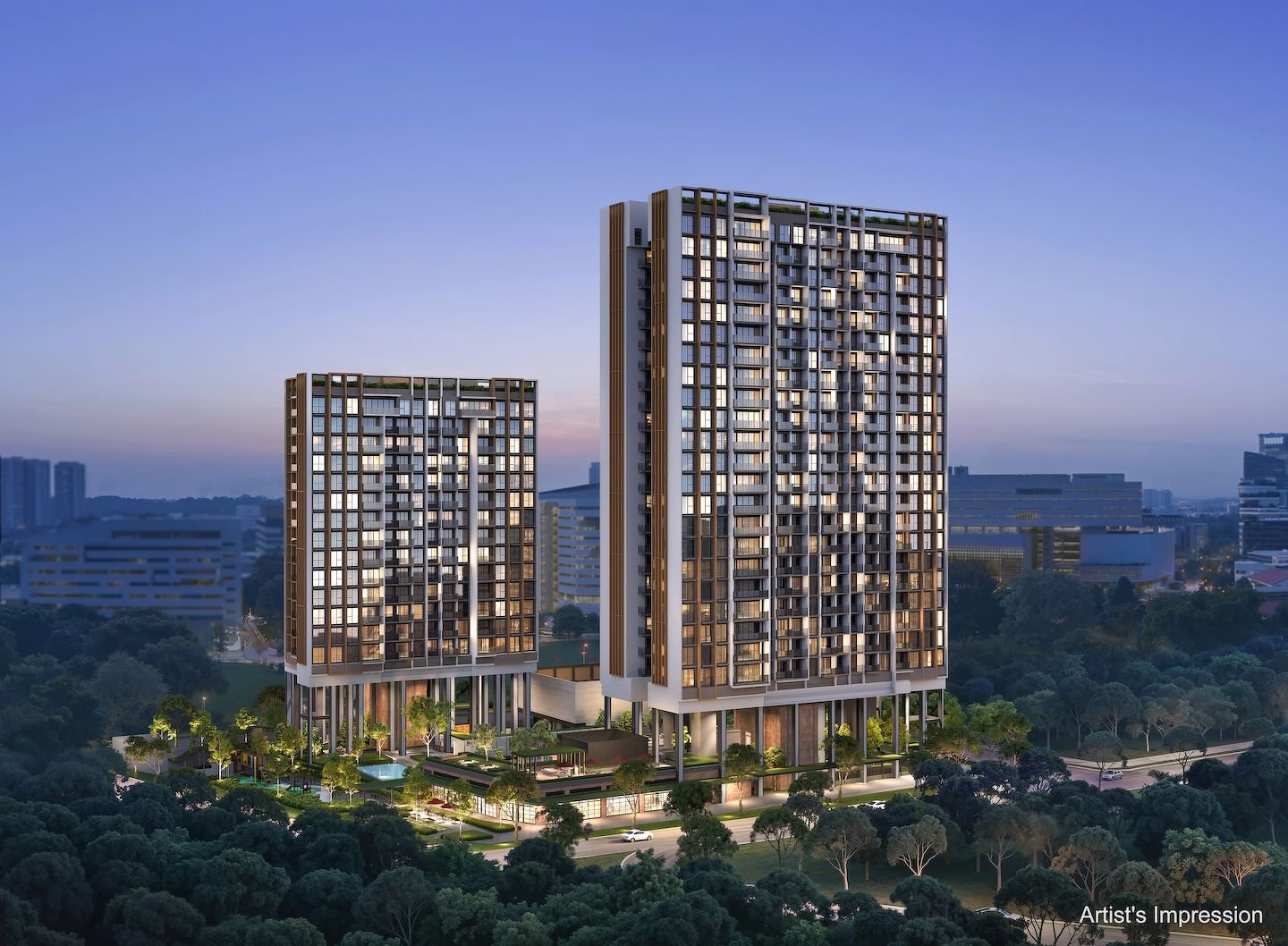
This One-North Project Sold 61% Of Its Units — At A Lower Average PSF Than Tampines And Bayshore
When most buyers think about “cheap” new launches today, they usually don’t think about city fringe projects.
Especially not in One-North.
Yet over the launch weekend, Hudson Place Residences quietly sold 201 out of 327 units — translating to 61.5% sales — at an average price of $2,458 psf.
What’s interesting is not just the sales number.
It’s where the pricing sits in today’s market.
Because in 2026, we are now seeing OCR launches in places like Tampines and Bayshore entering pricing territory traditionally associated with RCR projects.
And that changes the conversation entirely.
The Gap Between OCR And RCR Is Shrinking
For the longest time, buyers accepted one simple idea:
“If I’m paying city fringe prices, I should at least get city fringe location.”
But today, the lines are blurring.
Projects in outer regions are already pushing well above the mid-$2,000 psf range, while Hudson Place entered the market at an average of just $2,458 psf during launch weekend.
That creates a very interesting psychological shift for buyers.
Because suddenly, the question is no longer:
“Is One-North too ulu?”
Instead, the real question becomes:
“If OCR prices are already catching up… then is One-North actually undervalued?”
And based on the launch response, many buyers seem to think so.
Why Buyers Were Willing To Bet On One-North
Historically, One-North has always been viewed differently from traditional residential towns.
It was built around innovation, research, technology, and biomedical industries first — not lifestyle or residential living.
That was exactly why many people underestimated it.
But the fundamentals today look very different.
One-North is no longer just an office cluster. It is slowly transforming into a full live-work-play ecosystem backed by government planning, new residential supply, lifestyle amenities, and an expanding employment base.
According to multiple reports, buyer demand was largely supported by:
- Professionals working nearby
- Investors targeting rental demand
- HDB upgraders entering private property
- Families wanting proximity to schools and workplaces
And this is where Hudson Place stood out.
Buyers Were Not Just Buying A Condo — They Were Buying A Position
One of the biggest reasons why buyers moved quickly was because of relative pricing.
Hudson Place launched at a pricing level many buyers felt was still “ahead” of the next benchmark wave.
Nearby projects within the One-North transformation story have already been transacting at higher averages:
- Blossoms By The Park around $2,473 psf
- The Hill @ One-North around $2,532 psf
- Bloomsbury Residences around $2,540 psf
Yet Hudson Place came in at an average of $2,458 psf despite launching later into the cycle.
To many buyers, that represented pricing protection.
Not because the project was “cheap”.
But because the future launches around the area may eventually normalize pricing at a higher level.
This is something many investors understand very well:
Sometimes the best projects are not the cheapest ones.
They are the ones priced below where the market could eventually re-rate to.
The Most Interesting Signal? The 3-Bedrooms Were Fully Sold
One detail many people overlooked:
All 14 three-bedroom deluxe units were completely sold out during launch weekend.
This says a lot.
Because traditionally, One-North was seen as a tenant-heavy market dominated by small investors.
But the strong take-up for larger units suggests something else may be happening:
People are no longer viewing One-North purely as a rental play.
They are starting to see it as a place they can actually live in long term.
That shift matters.
Because when an area transitions from “investor-only demand” into genuine own-stay demand, the buyer pool becomes much deeper and more sustainable.
One-North’s Biggest Strength Might Actually Be Its Workforce
Unlike many residential estates that depend heavily on surrounding HDB populations, One-North has a very unique demand engine.
It is supported by a concentrated cluster of:
- Tech companies
- Biomedical firms
- AI businesses
- Research institutions
- Startups
- Universities and healthcare hubs
This creates a tenant and buyer pool that is fundamentally different from many suburban towns.
And with future developments such as Kampong AI and the broader Greater One-North transformation plans, many buyers believe the area is still in its early growth phase.
Final Thoughts
For years, One-North was treated like a “wait and see” story.
Many buyers hesitated because the area felt too new, too office-centric, or too different from traditional residential towns.
But markets often reward people before transformation becomes obvious.
And perhaps that is exactly why Hudson Place managed to move 61% of its units during launch weekend.
Not because buyers suddenly fell in love with One-North overnight.
But because many started realizing something important:
When even OCR launches are approaching similar pricing levels, a city fringe district backed by government transformation, strong rental demand, and future employment growth may no longer look expensive anymore.
In fact, it may start looking like value